Leaks, repeated faults or changing water demand
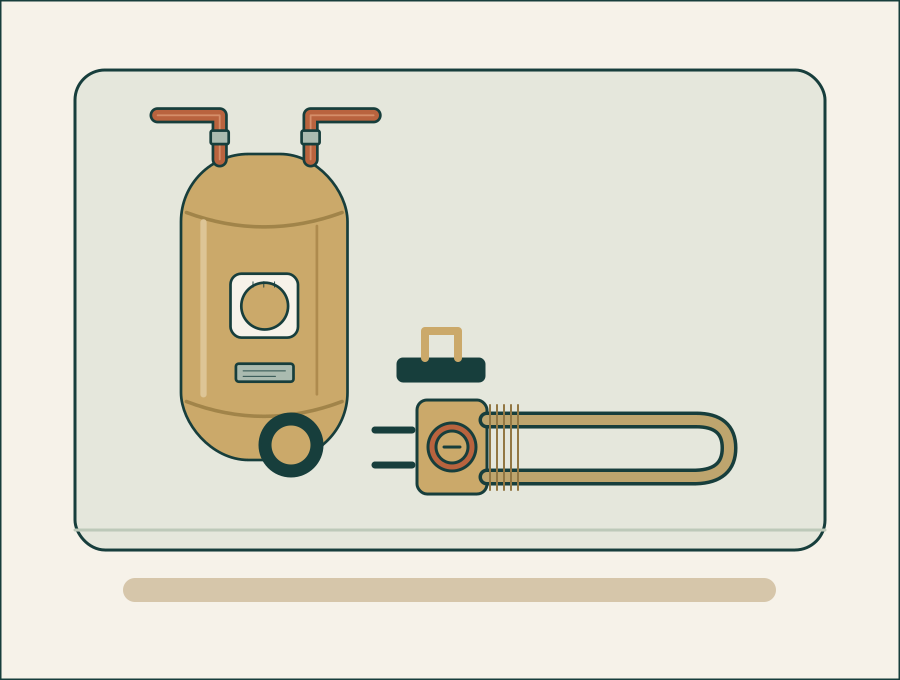
A leaking cylinder body, unsuitable capacity or deteriorated equipment may lead to replacement after assessment. A failed heating component or control can sometimes be addressed without replacing the storage vessel. Repeated faults need their cause established rather than an automatic whole-cylinder change. The reason for replacement should be clear before choosing new equipment.
Cylinder capacity and heating compatibility
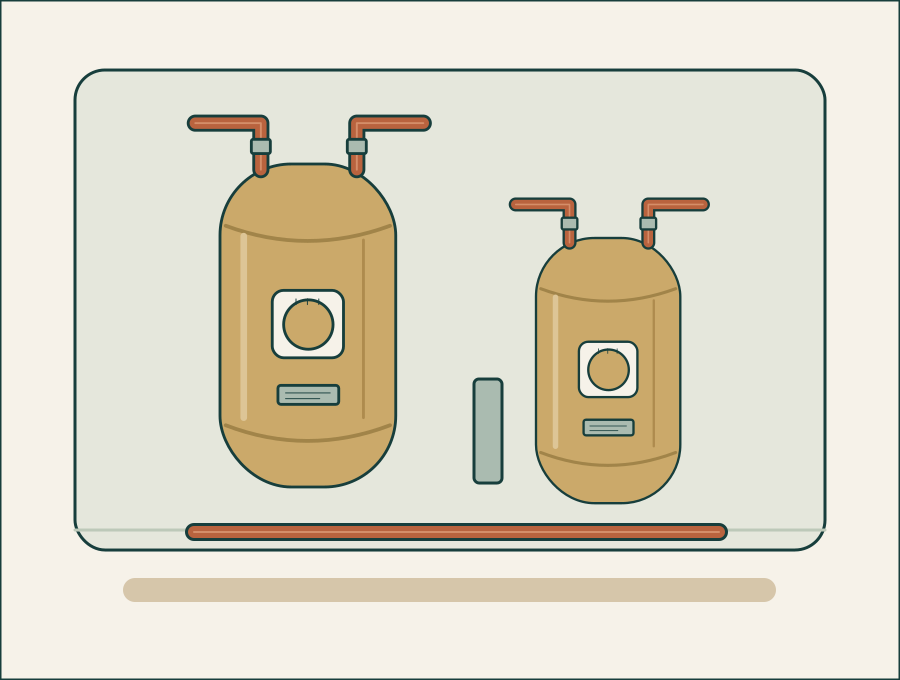
Cylinder capacity needs to reflect hot-water demand as well as the available installation space. The system type and heat source determine compatible equipment and connections. Changing capacity or arrangement may involve more than exchanging the vessel, including alterations to pipework or controls. A replacement specification therefore needs to consider the complete connected system.
Cylinder removal and connected pipework
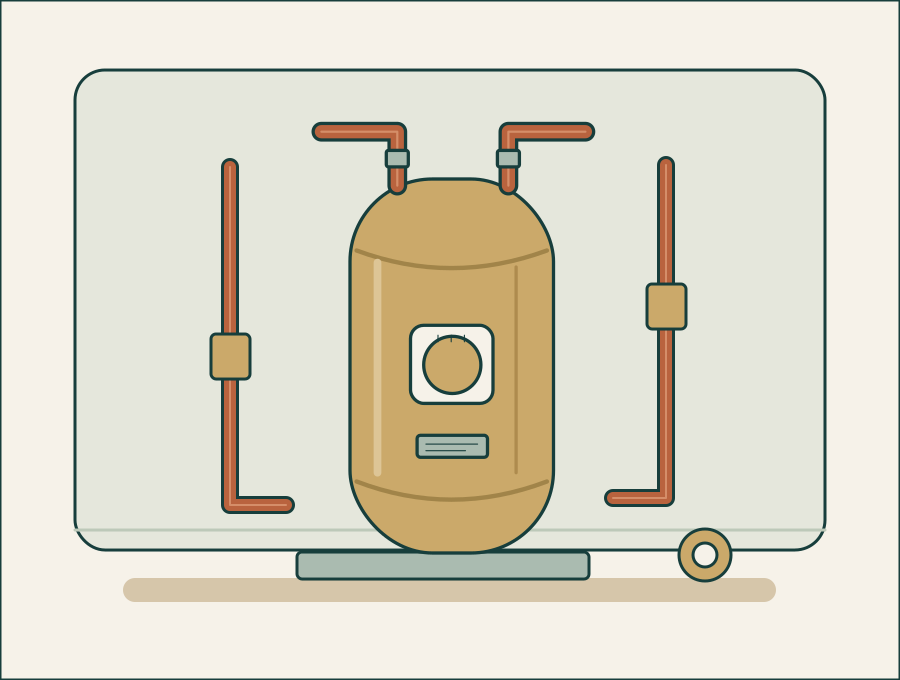
Consider the route for removing the old cylinder and bringing in the new one. Pipe changes, controls and electrical work may be involved. Agree who handles each part and any cupboard or building alterations.
Specification and completion requirements
Ask for the proposed specification, appropriate installer competence and completion requirements to be explained for your system. Clarify testing, handover information, disposal and any work excluded from the quote. Confirm the arrangements before installation.
Details for a cylinder replacement quote
Provide the existing cylinder details, photographs, access information and the household's hot-water use. State the reason for replacement and any wider refurbishment. If water is actively escaping, manage the urgent situation first.
Practical job questions
Your questions, answered.
Can the cylinder be replaced like for like?
Sometimes. Even a nominally equivalent model can differ in dimensions or connections. Confirm the replacement specification before arranging delivery.
Would an immersion replacement solve the problem instead?
Yes, if the fault is confined to the immersion assembly and the cylinder remains sound. Ask what diagnosis supports a complete vessel replacement.
Can capacity be changed?
Yes, subject to the system and available space. Describe peak demand, such as several showers close together, rather than choosing capacity from household size alone.
What documentation should be agreed?
Agree product details, user instructions, completed checks and any system-specific certificates or notifications that apply. Have the installer identify what is required rather than assuming one standard document covers every cylinder.
Is removal of the old cylinder included?
Only if agreed. Check that disposal off site is included, not merely disconnection and removal from the cupboard.