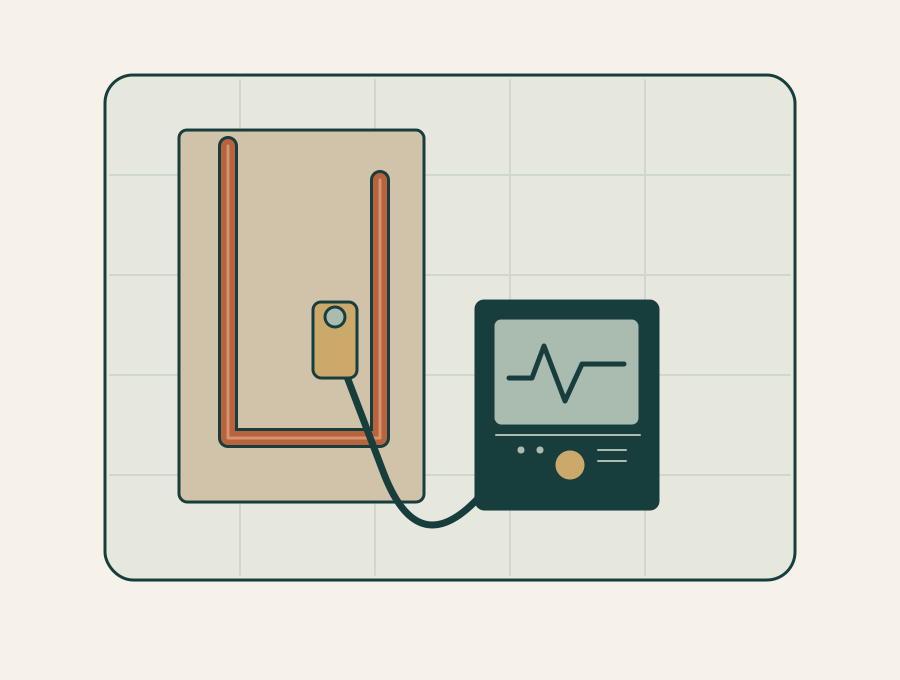
Visible leaks or hidden water loss
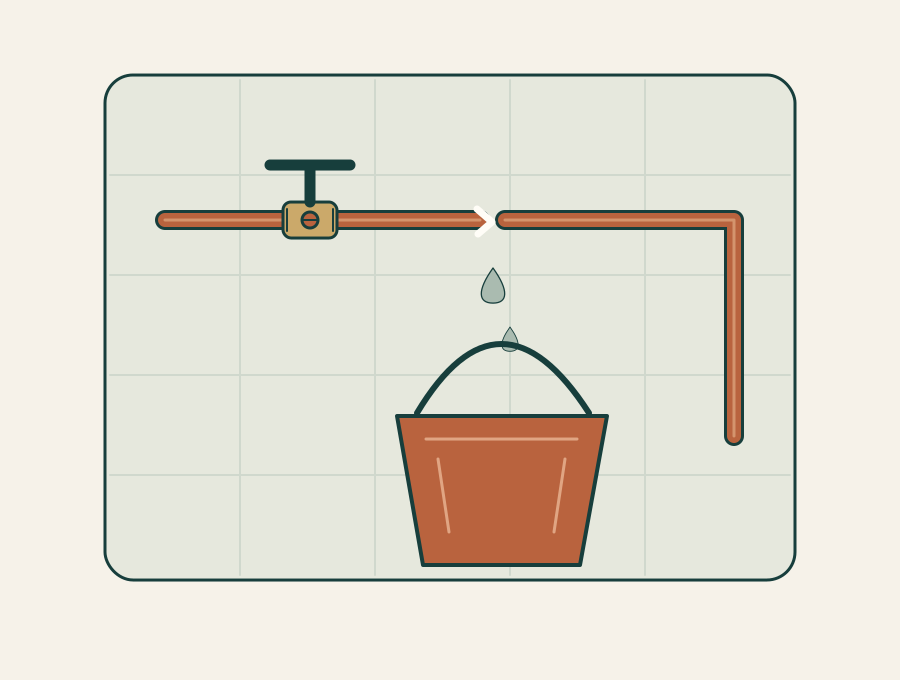
If you can see water leaving a pipe or joint, record its position and when it leaks. If all you can see is staining, moisture or damage, the source is still uncertain. Water can appear away from the place where it first escapes.
Leak detection or pipe repair
Leak detection is about locating and understanding a suspected leak. Pipe repair deals with a known section or connection. They may form stages of one job, but it is useful to ask whether investigation and the eventual repair are included together.
Leaks around sinks, toilets and showers
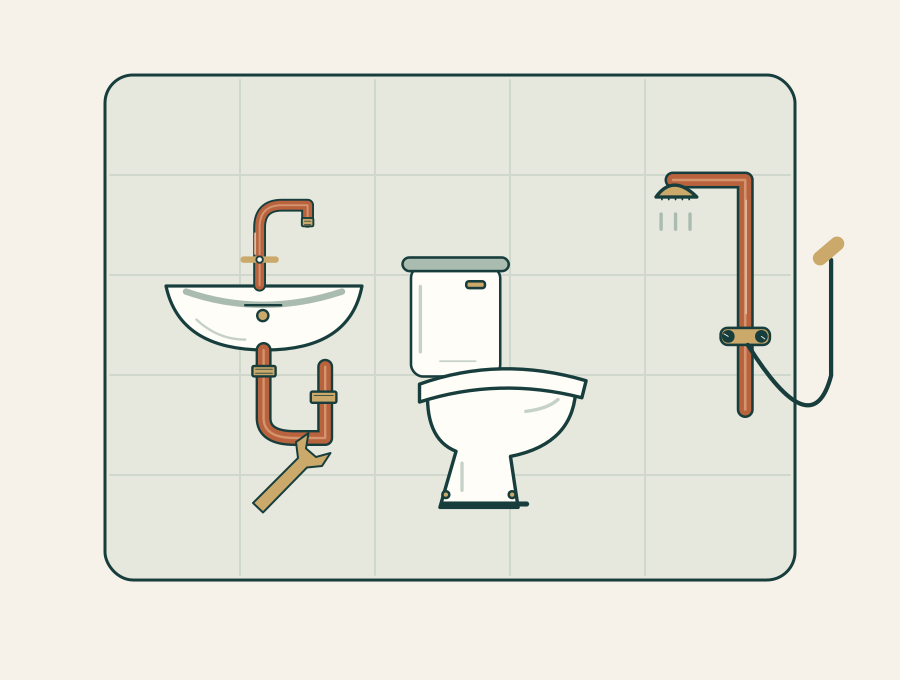
Water around a toilet, shower or sink may involve the fitting, its supply or its waste connection. Damp can also have a cause outside the plumbing. The pattern helps shape an investigation; it does not confirm the diagnosis by itself.
When and where the leak appears
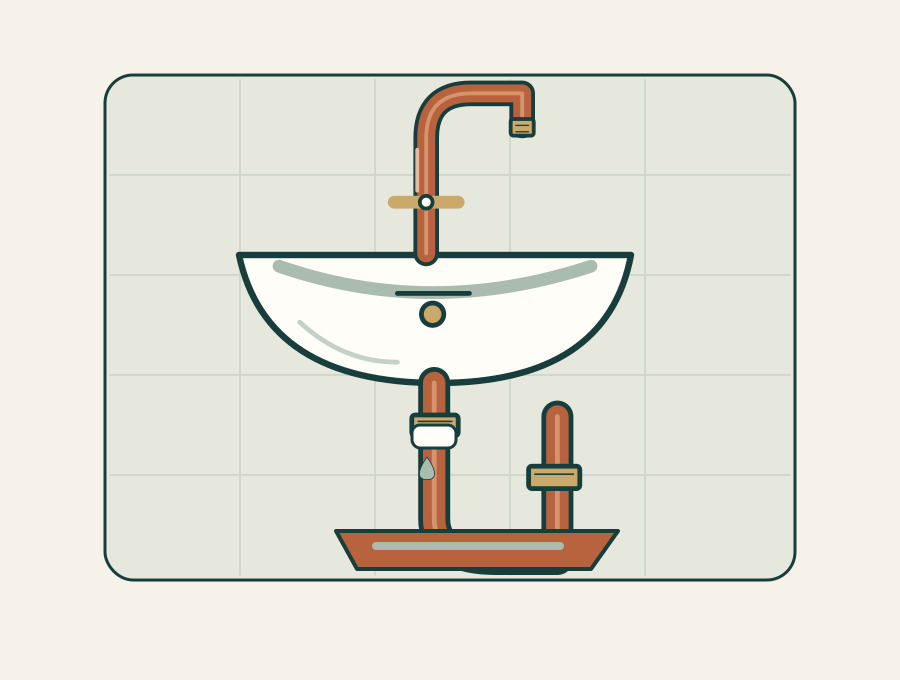
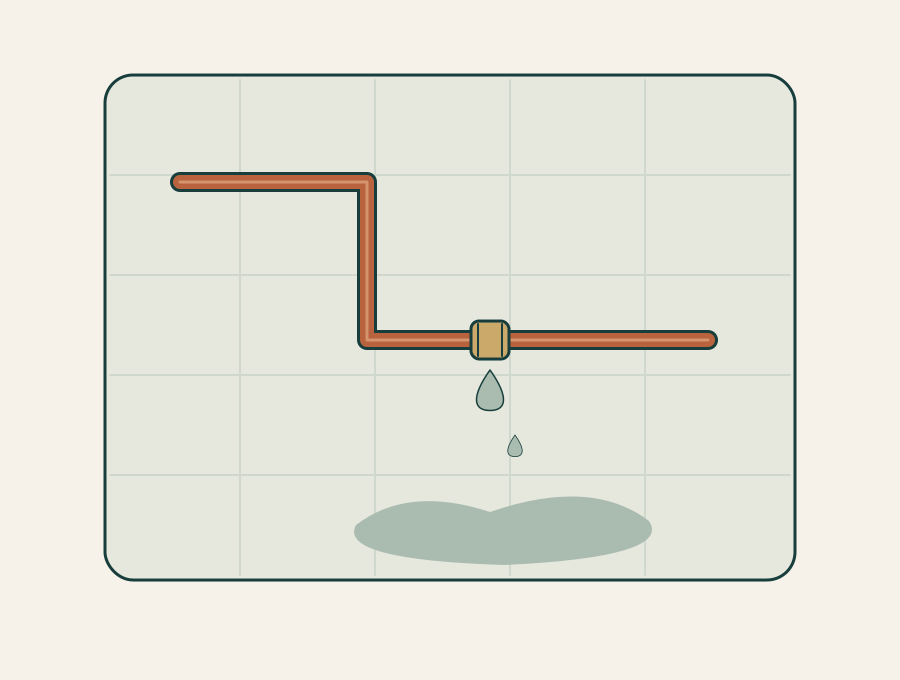
A leak that appears while a sink or bath empties can involve its waste connections. Water appearing around the supply pipework at other times needs a different investigation. Moisture may travel along surfaces before becoming visible, so the wettest patch is not necessarily the source. Concealed routes may require access through panels, floors or walls, followed by reinstatement.
Define the leak investigation and repair scope
Describe the evidence and whether the source is visible when seeking quotes. For an uncontrolled escape of water, address the immediate incident first. Planned investigation and making good can then be defined without confusing them with urgent attendance.
Practical job questions
Your questions, answered.
Does every damp patch mean a leaking pipe?
No. Condensation or water entering from outside can also cause damp. Identifying the source avoids paying for a pipe repair that will not address it.
Can finding and fixing the leak be quoted separately?
Yes. Check whether the detection fee includes a written finding and whether the same provider can quote for the repair afterwards.
What if the leak only appears when a fixture is used?
That narrows the circumstances of the leak, not necessarily its source. Note whether it starts during filling, use or emptying, without deliberately recreating a damaging leak.