Leaking, seized or ineffective stopcocks
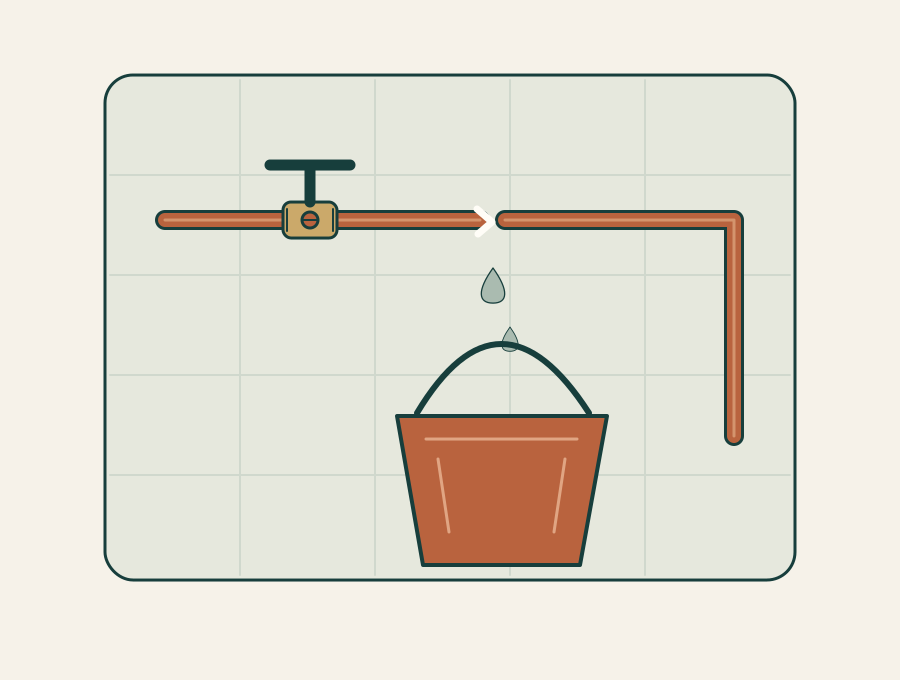
Explain whether the valve leaks, will not turn or fails to stop the supply. State where it sits and whether it is accessible. Do not force a seized fitting; an active escape of water may need urgent help before replacement is planned.
Internal stopcock or external supply equipment?
Internal stopcocks and external supply equipment are not interchangeable responsibilities. Identify which valve is involved. Work on an outside fitting may require contact with the supplier or another responsible party rather than a private repair assumption.
Supply isolation and valve access
The supply must be controlled before the stopcock is removed, using an arrangement suitable for the property and the valve's position. Shared or restricted access can affect how that is achieved. Connected taps and facilities may be unavailable during the change. The isolation method and interruption need planning before work starts, rather than improvising around a leaking or seized valve.
Replace or relocate the stopcock
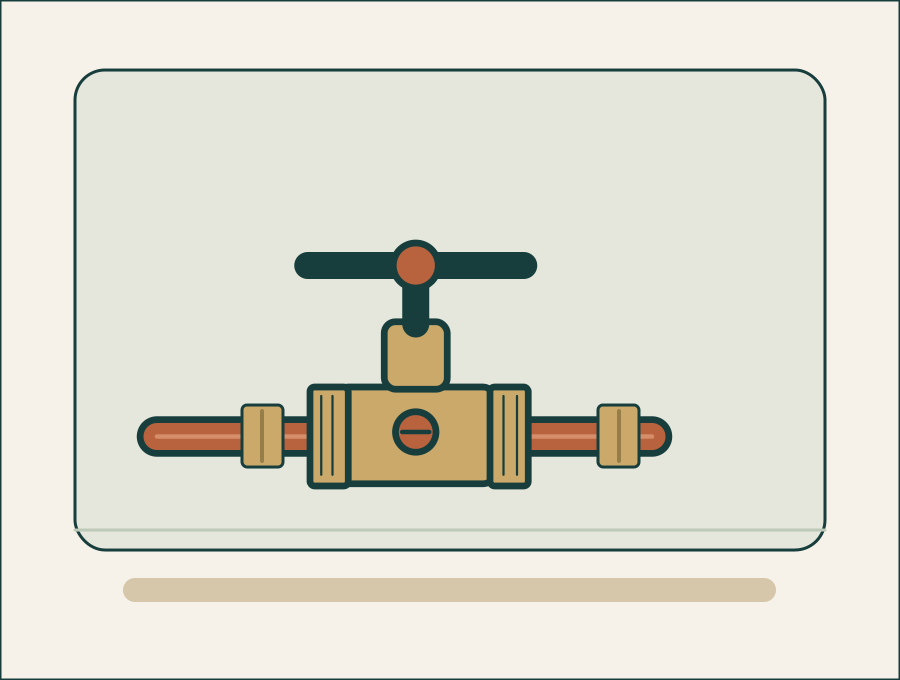
Replacing a faulty stopcock involves fitting a suitable valve and reconnecting the surrounding pipework. Deteriorated adjoining connections may need attention at the same time. Relocating it for easier access also changes the pipe route and may disturb a cupboard, wall or floor. The finished arrangement should be accessible for future use, with any reinstatement included in the work plan.
Details for a stopcock replacement quote
Share photographs of the fitting and surrounding space, the symptom and any known access arrangements. Ask for the replacement, connection work and completion checks to be described clearly.
Practical job questions
Your questions, answered.
Can a seized stopcock be replaced?
Yes, once a safe way to control the incoming supply is arranged. Do not force a seized valve while waiting for assessment.
What if it does not stop the water?
Tell the plumber before the visit, because that valve cannot be relied on to isolate the replacement work. Another suitable supply-control arrangement will be needed.
Who is responsible for an outside valve?
Ask the water supplier or building manager to identify ownership and responsibility for that specific valve. Its location outdoors alone does not settle the question.
Can the new stopcock be positioned more accessibly?
Often, if the pipe route permits. Choose a position that remains reachable after cupboards, appliances or stored items are returned.